If you're reading this, there's a good chance you're tired of dealing with loose dentures, sore spots, food getting underneath, or that low-level worry that your teeth might shift when you talk or laugh. A lot of people come in feeling frustrated, but also nervous. They want something more secure, yet the idea of implants sounds like a bigger step than they're ready for.
That’s completely normal.
When patients ask me what is an implant supported denture, they’re usually not asking for a textbook definition. They’re asking something more personal. Will it feel stable? Will it hurt? How long does it take? Will I be able to eat comfortably again? The good news is that this treatment is designed to solve the exact problems that make traditional dentures so hard to live with.
Defining Implant Supported Dentures
An implant-supported denture is a denture that’s held in place by dental implants instead of resting only on the gums. It's similar to building a deck on secure posts set into the ground instead of laying it directly on the grass. One has a stable foundation. The other can shift, sink, and move under pressure.
That foundation is the whole idea.
Traditional dentures sit on top of the gum tissue. Implant-supported dentures connect to small titanium implants placed in the jawbone. Over time, the bone bonds to the implant surface through osseointegration, which creates a stable anchor. The stability comes from that biological bond, and the implant can withstand forces of 200 to 400 N per implant. This healing process usually takes 3 to 6 months and has a 95 to 98% success rate, according to this overview of implant-supported dentures.

The Three Main Parts
Most patients understand the treatment much faster once they can picture the pieces:
- The implant: This is the titanium post placed in the jawbone. It acts like an artificial root.
- The abutment: This is the connector piece that joins the implant to the denture.
- The denture: This is the custom restoration that replaces the visible teeth and some surrounding tissue.
Each part has a different job. Together, they create a system that’s much more secure than a denture that depends on suction or adhesive.
Why It Feels Different
The biggest difference isn’t just that the denture stays in better. It’s that the support comes from the jaw rather than only from the soft tissue. That changes how pressure is handled when you bite, chew, and speak.
Patients often tell me they’ve spent years trying to “manage” their dentures. They cut food into tiny pieces. They avoid crunchy or chewy foods. They speak carefully. Implant support changes that conversation from managing movement to trusting your teeth again.
Practical rule: If your main complaint is that your denture moves, lifts, rubs, or makes you self-conscious, the issue usually isn’t just the denture itself. It’s the lack of stable support underneath it.
There are also different ways these dentures can attach. Some come in and out for cleaning. Others stay in place and are removed only by the dentist. I’ll explain those options next, because choosing between them affects your daily routine as much as it affects the final result.
If you want a broader overview of implant treatment before comparing denture designs, this comprehensive guide to a brighter smile is a helpful place to start.
Exploring Fixed Versus Removable Implant Dentures
Once people understand what is an implant supported denture, the next question is usually, “Do I take it out at night, or does it stay in?” That’s the practical fork in the road.
There are two main categories. Fixed implant dentures stay in place and are removed by the dentist for maintenance. Removable implant dentures, often called overdentures, snap onto implants and can be taken out at home for cleaning.

Fixed Implant Dentures
A fixed option feels closer to having a set of teeth that stays put all the time. You don’t remove it yourself. That appeals to people who want the strongest sense of permanence and don’t like the idea of handling a denture every day.
Many patients describe fixed teeth as psychologically freeing. They wake up with teeth in place. They don’t need denture adhesive. They don’t carry a container or worry about where to put the denture at night.
That said, fixed restorations require a committed cleaning routine. Since you can’t remove them at home, you need to clean carefully around and underneath them with the tools your dentist recommends.
Removable Implant Dentures
A removable overdenture attaches securely to implants, but you can still take it out for daily cleaning. This option often gives people a very nice balance between stability and simplicity.
It doesn’t mean the denture is loose. It means the denture is retained by implants rather than permanently screwed in place. Many patients like being able to clean everything directly and thoroughly at home.
Some people want maximum “locked in” feel. Others want easier hygiene and simpler maintenance. Neither preference is wrong. It depends on your priorities, dexterity, anatomy, and budget.
Bar Retained And Ball Retained Systems
Within removable designs, patients usually hear about two common attachment styles.
- Ball retained systems: These work a bit like snaps on clothing. The denture clicks onto attachments on the implants. They’re familiar, compact, and straightforward.
- Bar retained systems: These connect the implants with a bar, and the denture attaches to that bar. Think of it more like a train sitting on a track. The support is shared across the bar.
The feel can differ. A bar may distribute force in a different way. A ball-style attachment may be easier for some patients to manage. The right choice depends on bone shape, implant position, available space, and how much retention you want.
How Daily Life Changes With Each Option
Here’s the question I usually ask patients: what kind of routine will feel easiest for you six months from now, not just on the day you get your teeth?
- If you want more permanence: Fixed may fit your personality better.
- If you want easier home cleaning: Removable may feel less stressful.
- If hand dexterity is limited: We choose the design that you can comfortably manage.
- If you’ve had trouble with full dentures before: Either type can be a major improvement if it’s planned well.
For a broader side-by-side look at lifestyle differences, this comparison of dental implants vs dentures pros and cons can help you frame the conversation before your consultation.
Your Treatment Journey From Consultation To Final Smile
You sit down for your first visit expecting a sales pitch or a frightening list of steps. Instead, the conversation starts with your story. What feels loose, what hurts, what foods you avoid, and what worries you most about treatment. For many patients at St. Pete Family & Cosmetic Dentistry, anxiety drops as soon as the process becomes specific.

The Consultation And Planning Visit
The planning visit is the blueprint stage. Before anyone builds a house, they study the foundation. Implant treatment works the same way.
We examine your mouth, review your health history, and talk through what you want your new teeth to do in everyday life. Some patients want stronger chewing. Others want to speak without feeling their denture shift. Many want both.
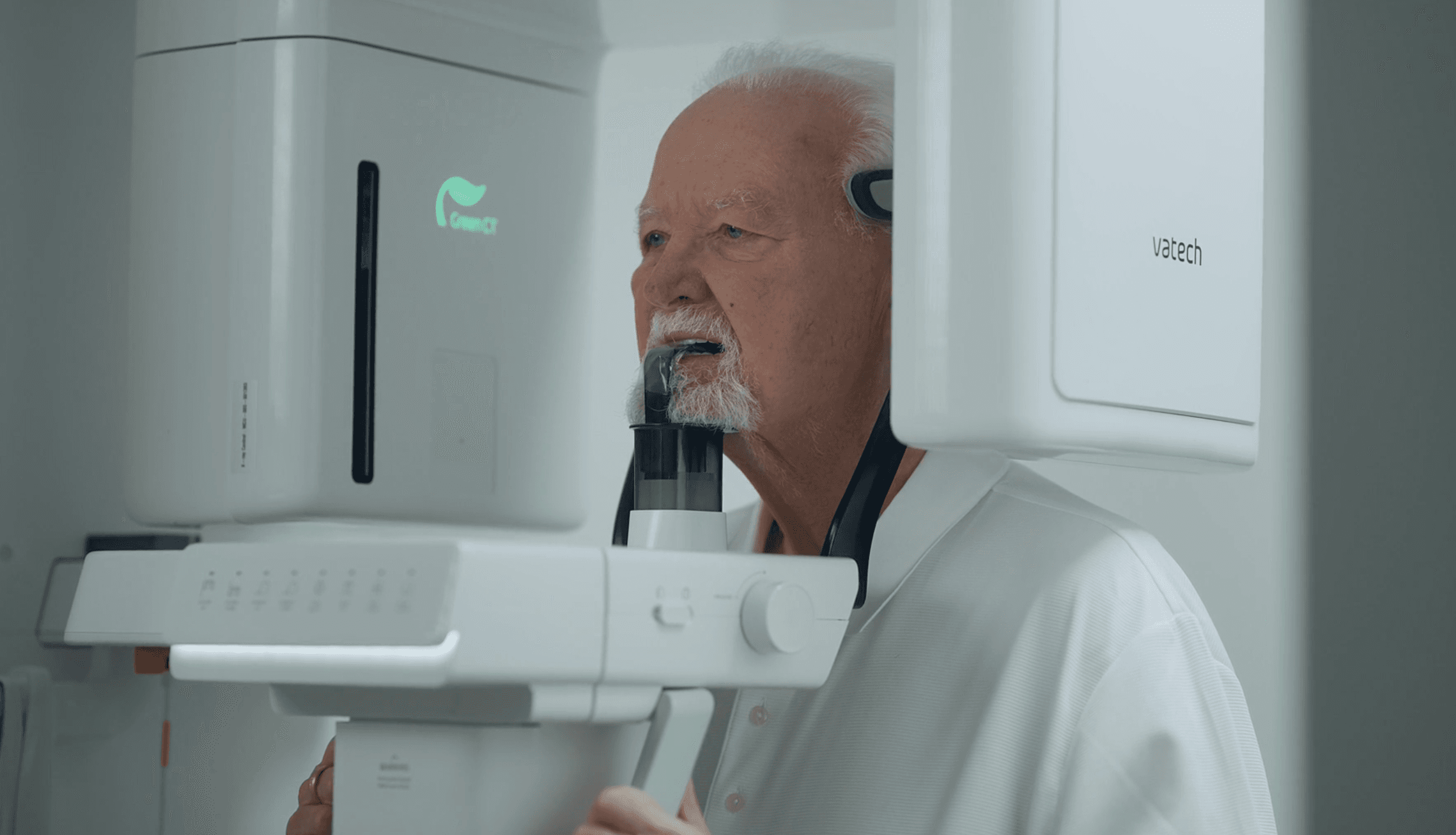
Advanced imaging makes that planning much more accurate. With Vatech CT/Pano imaging, we can see your bone in three dimensions, including bone width, bone height, nerve pathways, sinus location, and the safest areas for implant placement. That lets us plan with your actual anatomy, not with guesswork based on a flat image.
Patients who have been told, “you may not be a candidate,” often find this visit especially helpful. Sometimes the answer is not yes or no. Sometimes it is a question of choosing the right denture design, placing implants in the best positions, or preparing the area first so treatment is safer and more predictable.
Making The Procedure Comfortable
Fear of surgery is real. It is also common.
Many patients are less worried about the final smile than about the appointment itself. That is why comfort planning is part of treatment planning, not an afterthought. We talk through what helps you feel in control, then match that to the procedure and your medical history.
Some people are comfortable with local anesthetic and a calm, step-by-step visit. Others feel better with laughing gas, oral sedation, IV sedation, or general anesthesia. Sedation does not make implants stronger, but it can make the experience feel far more manageable for someone who has delayed care because of fear.
A good treatment plan respects both the mouth and the person attached to it.
Implant Placement Day
On surgery day, the implants are placed into the jawbone using the digital plan created from your scans. That planning matters because implants are small, and the space around them matters too. We are working around bone contours, nearby nerves, bite forces, and the future shape of your denture.
Some patients receive a temporary restoration during healing. Others do better with a staged approach, especially if the bone needs time to recover without extra pressure. The exact plan depends on your anatomy, the type of denture you are getting, and how much stability we can safely create on day one.
If you are worried that the procedure will feel chaotic, it usually feels more structured than patients expect. By the time surgery day arrives, the key decisions have already been made from the imaging, measurements, and comfort plan.
The Healing Phase
Healing is the quiet middle chapter, and it matters more than many patients realize. During this stage, the implants bond with the bone. That bond is what gives the denture its anchor.
You will get clear instructions for eating, cleaning, soreness, and follow-up visits so you know what is normal and what deserves a call. If you want a fuller explanation of recovery, this patient guide to what to expect after dental implant surgery walks through the healing period in plain language.
This part takes patience. It is similar to letting concrete set before putting weight on it. Rushing sounds appealing, but good healing gives the final denture a stronger foundation.
Designing The Final Denture
Once healing is complete, we move into the stage patients have usually been waiting for most. We design the final denture for fit, bite, appearance, and day-to-day comfort.
3Shape digital scanners help capture detailed information about how your teeth come together and how the denture should sit against the supporting tissues. That precision helps reduce small fit problems that can make a big difference once you are eating, speaking, and wearing the denture every day.
This is often the moment when the treatment starts to feel real. Patients stop asking, “Will this work?” and start noticing that they can smile, chew, and talk with much less self-consciousness.
Your journey usually includes these checkpoints:
- Evaluation and digital imaging to map your anatomy clearly.
- Comfort planning to choose the sedation approach that fits your needs.
- Implant placement based on the surgical guide created from the scans.
- Healing and follow-up visits to protect the implants while they integrate with bone.
- Final denture design and attachment after fit, bite, and appearance are refined.
The Life Changing Benefits Of Implant Dentures
The reason people choose implant dentures usually isn’t technical. It’s emotional and practical. They want to eat without worry, speak without thinking about their teeth, and stop structuring daily life around a prosthesis that feels unreliable.
That’s where the difference becomes personal.

Better Stability And Confidence
A loose denture can affect more than chewing. It can change the way you laugh, how wide you smile, and whether you feel comfortable speaking in public or at dinner with friends.
The satisfaction difference has been measured clearly. In an NIH-cited comparison summarized in this review of implant-supported vs traditional dentures, patients with implant-supported dentures rated overall satisfaction 8.9 out of 10, compared with 6.5 out of 10 for traditional denture wearers. Stability scores were 9.2 out of 10 for implant-supported dentures versus 5.8 out of 10 for conventional dentures.
Those numbers match what many patients say in simple terms: “I don’t feel like they’re about to move.”
Easier Eating And Clearer Speech
When a denture is more secure, you don’t have to chew so cautiously. You can bite with more confidence, and speech often feels more natural because the denture isn’t shifting during conversation.
That has a ripple effect. Meals become less stressful. Social situations feel easier. People often stop thinking about their teeth every few minutes, which is a bigger quality-of-life change than most expect.
Support For Jawbone And Facial Structure
Tooth loss affects bone over time. When the jaw no longer gets the kind of stimulation natural tooth roots once provided, the ridge can shrink. Implant support helps preserve the jaw because the implant is anchored in bone rather than sitting only on soft tissue.
Patients don’t always notice this at first. They usually notice the fit problems that come later with conventional dentures. Implant support addresses the problem lower down, where the support system starts.
A denture replaces teeth. An implant-supported denture replaces teeth with an anchor underneath them. That’s why the experience is so different.
Fewer Daily Workarounds
People often come in with a list of little coping habits they’ve developed over the years:
- Using adhesive constantly because they don’t trust the denture to stay put
- Avoiding certain foods because biting feels risky
- Speaking carefully to prevent clicks or movement
- Living with sore spots because they assume that’s just part of dentures
Implant support doesn’t eliminate every adjustment period, but it can remove many of those daily workarounds. That’s why patients often describe the result as life-changing, not just better.
Determining If You Are A Candidate For Implant Dentures
Many people assume they’re either a perfect candidate or not a candidate at all. Real life is rarely that simple. Implant denture planning is more like matching the treatment to the person than checking a single yes-or-no box.
Bone, Health, And Bite All Matter
One of the first questions is whether you have enough jawbone in the right areas to support implants. That’s not something anyone should guess about from a quick glance. A three-dimensional scan gives the definitive answer.
Bone quality matters too. The upper and lower jaws behave differently, and the available space for the denture components can influence which attachment system will work best. In some patients, limited vertical space changes the design options significantly, so planning has to be careful and realistic.
Bone Loss Doesn’t Automatically Rule You Out
A history of bone loss doesn’t always mean implants are off the table. It may mean we need a different approach, such as changing the implant layout, using a removable overdenture instead of a fixed option, or discussing whether a preparatory procedure is worth considering.
Modern imaging and treatment planning are especially helpful, enabling even patients who have struggled with a traditional lower denture for years to be strong candidates for a more stable implant-retained solution, even if the anatomy isn’t ideal.
If you want a patient-friendly overview of how this process is evaluated, this introduction to dental implant procedures in St. Petersburg explains the early planning stage clearly.
Medical Conditions Require Planning, Not Panic
Implant dentistry isn’t reserved only for people with a flawless medical history. For medically compromised patients, implant-supported overdentures can still perform very well. ITI consensus reports confirm 95% implant survival rates over 5 years for two-implant mandibular IODs, and they note that this can be a less invasive and more cost-effective option for frail or elderly patients than fixed prostheses, as summarized in this ITI clinical discussion of implant-supported overdentures.
That doesn’t mean every medical condition carries the same risk. It means careful review matters. We look at healing ability, medications, smoking status, diabetes control, and coordination with your physician when needed.
Good Candidates Usually Share A Few Traits
Most strong candidates fit some version of this profile:
- They want more stability than a conventional denture can provide.
- They’re willing to maintain the result with home care and checkups.
- They understand the timeline and don’t expect a same-day shortcut in every case.
- They’re open to a customized plan if anatomy or health history calls for one.
The best candidate isn’t the patient with the “perfect mouth.” It’s the patient whose goals, health, and treatment plan line up well.
Understanding The Cost Care And Longevity Of Your New Smile
A common question many patients have is, “Will this really be worth it?” That is a fair question. Implant-supported dentures usually cost more up front than traditional dentures, so the decision should feel clear, not rushed.
The best way to understand the cost is to picture a house built on a stronger foundation. You are not only paying for the denture you can see. You are also paying for the implants that anchor it, the digital imaging that lets us plan with precision, the lab work, the visits needed to fine-tune the fit, and, for many patients, sedation options that make treatment far less stressful.
Cost Is Tied To Your Specific Plan
No two full-smile cases are exactly alike. Your fee can change based on the number of implants, whether your denture is fixed or removable, the condition of the bone and gum tissue, whether extra preparation is needed, and what type of sedation helps you feel comfortable during treatment.
That is why internet price ranges often create more confusion than clarity. A real estimate comes after an exam and detailed digital scan, because those tools show us what your mouth needs instead of forcing a guess.
Comfort matters here too. Some patients are mainly comparing appliances. Others are also comparing the experience of treatment itself. At St. Pete Family & Cosmetic Dentistry, planning may include 3D imaging, digital scanning, and sedation choices so the process feels more predictable and easier to handle, not like something you just have to endure.
Care Is Different From A Traditional Denture
Implant-supported dentures need daily attention, but the routine is usually very manageable once you know what to do.
- Removable implant dentures: You take them out to clean the denture and the attachment areas.
- Fixed implant dentures: You clean underneath and around the restoration using the tools your dentist recommends.
- Both types: You still need professional checkups so the implants, gum tissue, bite, and denture parts can be monitored over time.
Patients sometimes hear “implants” and assume nothing will ever need maintenance. A better comparison is a car with a strong engine. It may run beautifully for years, but it still needs regular service to stay reliable.
Longevity Depends On What You Maintain
Implants are designed for long-term use, and many patients enjoy them for many years. The part that often surprises people is that different pieces of the system can age at different speeds. The implants in the bone may stay stable for a long time, while attachment parts, acrylic, or denture teeth may wear and need repair or replacement from normal use.
Daily cleaning, regular exams, bite forces, smoking, health conditions, and the design you choose all affect durability. If longevity is one of your biggest concerns, this guide on how long dental implants can last over time explains what tends to protect the result and what shortens its lifespan.
Why Many Patients View It As A Long Term Investment
Patients rarely judge implant dentures by appearance alone. They talk about eating without the denture shifting, speaking with less worry, and not planning their day around adhesive, sore spots, or embarrassment in public.
That quality-of-life change has real value. For an anxious patient, there is another layer to the decision. A well-planned case that uses advanced imaging and the right level of sedation can make the treatment journey feel calmer from the first consultation to the final fit. That peace of mind matters just as much as the finished smile.
Your Next Steps And Frequently Asked Questions
If you’ve made it this far, the main takeaway is simple. Implant-supported dentures are designed for people who want more security, comfort, and function than a traditional denture can usually provide. The right version depends on your anatomy, your goals, and how you want your daily routine to work.
For many patients, the first step isn’t deciding yes or no. It’s getting a clear evaluation so you know what’s possible.
Common Questions Patients Ask
Will My Dental Insurance Help Cover The Cost
Possibly. Coverage varies widely, and benefits often differ for the surgical, restorative, and denture portions of treatment. The best next step is to have your plan reviewed alongside your clinical needs so you get an accurate breakdown rather than a guess.
What Will Implant Dentures Feel Like In My Mouth
They usually feel more secure than traditional dentures. Removable versions still come out for cleaning, but they tend to feel much more anchored when seated properly. Fixed versions feel more like a stable set of teeth that stays in place.
How Soon Can I Eat Normally
Healing and diet advance in stages. Right after surgery, you’ll usually follow a softer-food period while the implants heal. Your dentist will tell you when it’s safe to increase chewing based on the stability of the implants and the type of prosthesis you’re wearing.
Are Implant Dentures Painful
Most patients are relieved to find the process is more manageable than they expected. Numbing and sedation options can make the procedure much easier, and soreness afterward is usually handled with detailed post-op instructions and close follow-up.
Am I Too Old For Implant Supported Dentures
Age by itself usually isn’t the deciding factor. Overall health, healing capacity, bone support, and treatment goals matter more than the number on your birthday.
What If I’ve Been Told I Don’t Have Enough Bone
That may or may not be the final answer. Bone volume, bone quality, restorative space, and denture design all affect the plan. A detailed scan can show whether a different implant arrangement or a different style of prosthesis would work better.
What Is The First Step To Get Started
Schedule a consultation that includes a full exam and imaging. That visit gives you real information about candidacy, comfort options, timing, and whether a fixed or removable design fits your situation better.
Should I Feel Nervous About This
Yes. Many people do. The important part is not pretending you’re relaxed when you’re not. Tell your dental team what worries you most. When we know whether your fear is the surgery, the healing, the cost, or the unknown, we can address it directly.
If you’re ready to talk through your options in a low-pressure setting, St. Pete Family & Cosmetic Dentistry offers consultations for patients in St. Petersburg and Tampa who want to understand whether implant-supported dentures fit their needs, comfort preferences, and long-term goals.